
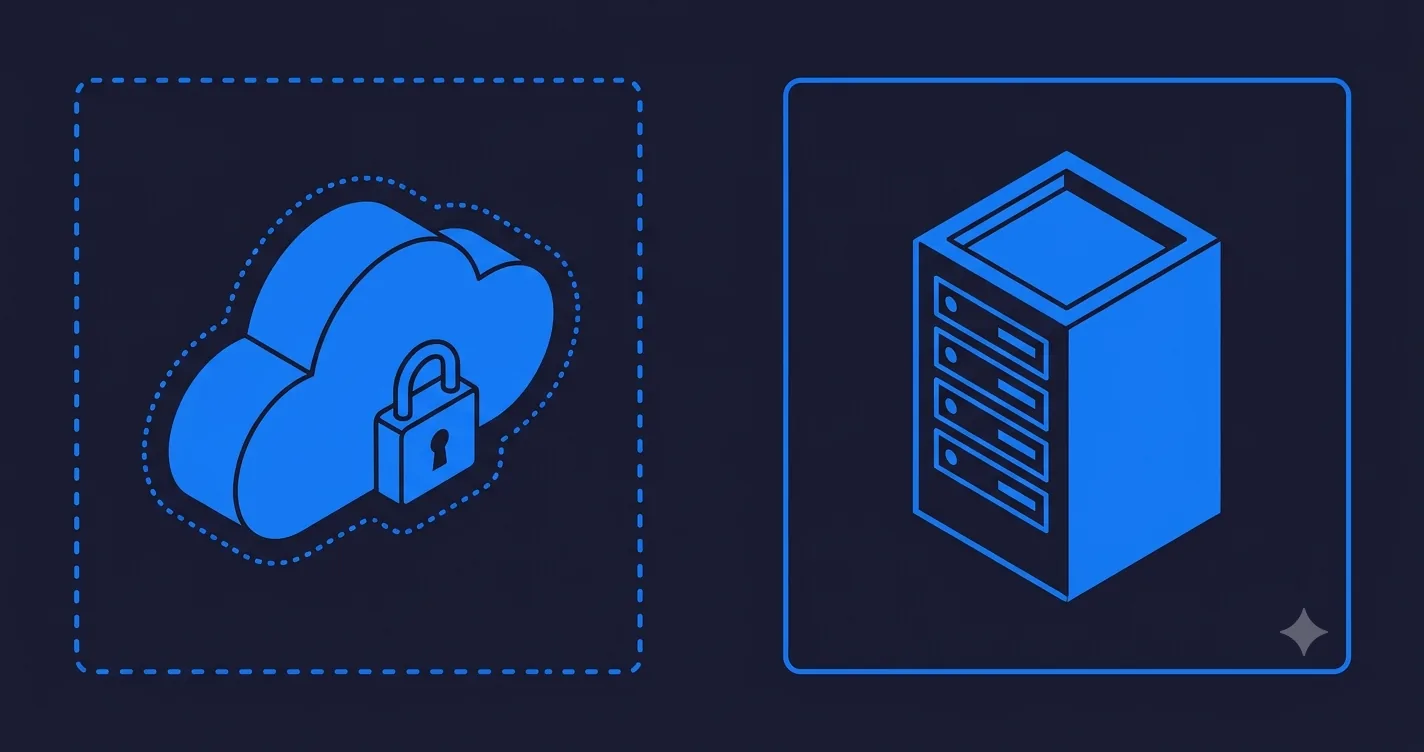
The moment HR data enters an internal AI search project, the self-hosted versus SaaS decision stops being a technical preference and starts being a compliance question. Payroll details, performance reviews, disciplinary records, and medical accommodation requests are a different risk category than engineering wiki pages, and the platform choice that was fine for the second often is not acceptable for the first.
What actually changes when HR data is involved?
Three things change: who is allowed to see what gets a lot stricter, the data residency and retention question gets a real answer required (not a vague one), and the blast radius of a mistake gets much larger. A leaked engineering doc is embarrassing. A leaked performance review or compensation detail is a legal and trust problem. Most companies evaluate AI search tools against engineering and IT use cases first, where a SaaS tool's standard terms are usually fine, then try to extend the same tool to HR later and discover the terms were never built for that data class.
What does a SaaS AI search tool actually promise, and what does it not promise?
A typical SaaS AI search or RAG platform promises encryption in transit and at rest, access controls, and usually a claim about not training on your data. What it does not usually promise, unless you are on an enterprise tier with a specific data processing agreement, is that your HR documents never leave your control, never get processed by a third-party model provider outside your contractual boundary, or never sit in a shared multi-tenant index alongside other customers' data. For engineering docs, that is often an acceptable tradeoff for speed. For HR data, read the data processing agreement specifically for this before assuming the standard terms cover it.
What does self-hosting actually solve, and what does it not solve?
Self-hosting an open-source platform (Onyx is one option, there are others) means the indexed data, the retrieval layer, and optionally the model inference stay inside infrastructure you control, whether that is your own cloud account or on-prem. It solves the "does this leave our boundary" question definitively, because there is no third party in the data path by default. It does not solve access control by itself, you still need to configure permissions correctly, and it does not remove the maintenance burden, someone still owns connector health, index freshness, and security patching. Self-hosting trades a vendor's compliance posture for your own operational discipline.
Is self-hosting worth the extra operational work for every company?
No. If your AI search use case is limited to engineering docs, product wikis, and general company knowledge, a well-vetted SaaS tool with a real enterprise data agreement is usually the faster, lower-maintenance choice, and the compliance stakes do not justify the extra infrastructure ownership. Self-hosting earns its complexity specifically when HR, legal, financial, or regulated customer data needs to be searchable, and your legal or security team has a hard requirement (not a preference) that the data cannot leave your own environment. If you are not sure which category you are in, that is usually itself a sign to get your legal or compliance team to make the call explicitly rather than defaulting either way.
Can you run both models at once, SaaS for some data and self-hosted for HR specifically?
Yes, and it is a common and reasonable setup. Many teams run a SaaS tool for general engineering and product knowledge, where speed and low maintenance matter more, and a separate self-hosted instance scoped specifically to HR and any other regulated data, where control matters more than convenience. The two systems do not need to be the same platform or even look the same to end users, as long as each one is matched to what its data actually requires. We walk through how to configure a self-hosted deployment for this kind of scoped use case in how to use Onyx in the enterprise to get maximum benefit.
What questions should your legal or security team answer before you pick either model?
Four questions settle most of it. Does your HR data processing agreement with any SaaS vendor explicitly cover AI search and retrieval use cases, not just storage? Is there a contractual or regulatory requirement that HR data cannot leave a specific jurisdiction or environment? Do you have the operational capacity to own a self-hosted deployment's maintenance, or would you be taking on a burden with no clear owner? And is the risk tolerance for HR data genuinely different from your risk tolerance for engineering data, or are you treating all internal documents the same by default without having actually decided to?
If you are weighing a self-hosted deployment specifically for HR or compliance-sensitive internal search, see our AI agent for internal ops page for how we structure IT and HR knowledge search together, with self-hosted infrastructure available where the data requires it. For a practical deployment guide once you have decided self-hosting is the right call, read how to use Onyx in the enterprise to get maximum benefit.