
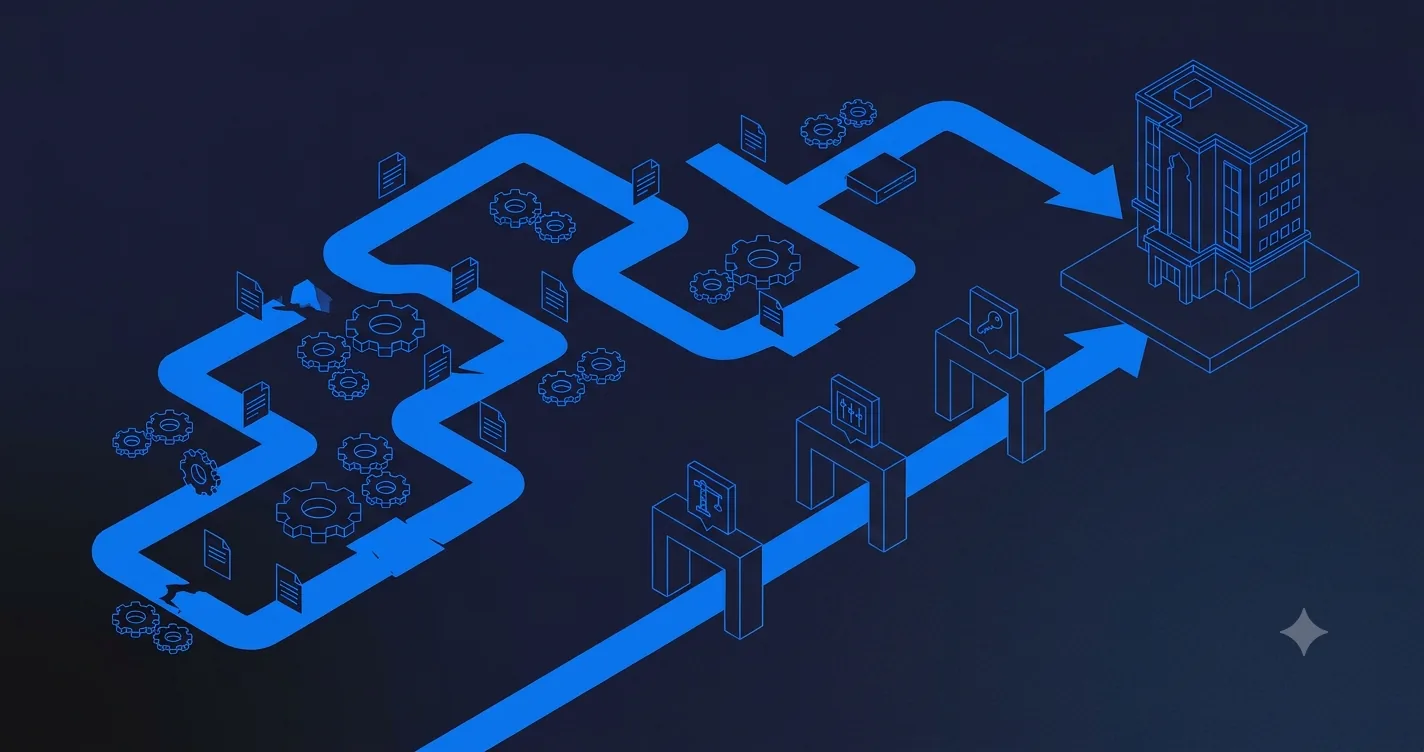
If you are planning a Global Capability Center in India with 25 or more people on the roadmap, you have three real options: build your own entity from scratch, hire a staff augmentation vendor and stay dependent on them indefinitely, or use a Build-Operate-Transfer (BOT) partner who builds and runs the center, then hands you full ownership on a date you agree up front. BOT is the middle path, and it is the right one for most teams that want a scaled, owned India presence without spending a year learning how to run one.
What is a GCC, and how is it different from staff augmentation?
A Global Capability Center (GCC), sometimes called a captive center, is a dedicated offshore operation that a company owns and runs as an extension of itself, not a vendor relationship. Staff augmentation gives you people who work as your team but remain employed by the vendor indefinitely, with no path to you owning the entity or the employment relationship. A GCC is the opposite: the entity, the team, and the infrastructure belong to you. The question is only how you get there.
What does a Build-Operate-Transfer model actually mean for a GCC?
BOT splits the GCC lifecycle into three phases, each handled by a partner who has done it before. In Build, the partner handles entity planning support, hiring the core team against your bar, and setting up infrastructure and compliance. In Operate, the partner runs HR, payroll, delivery management, and quality day to day while headcount scales toward your target. In Transfer, the entity, every employee's contract, and the infrastructure move to you in full, on a date agreed before the center was even built. You get a center that behaves like an owned operation from month one, without having to build the operating muscle yourself first.
How is BOT different from building your own India entity from day one?
Building your own entity from scratch means you personally carry entity registration, statutory compliance, HR infrastructure, and hiring pipeline from the very first day, usually a four to six month runway before your first hire even starts. Our staff augmentation vs EOR vs India entity breakdown covers that path in detail, including when it makes sense to do it yourself. A BOT partner compresses that runway because the operating infrastructure already exists. You still end up owning the entity, you just do not have to be the one who stood it up and learned its operational quirks under time pressure while also trying to hire fifty people.
The honest tradeoff: doing it yourself from scratch gives you full control from day one, at the cost of a much longer runway and a steep operational learning curve. BOT gets you to a running, scaling center faster, with the partner carrying the operational risk during Build and Operate, in exchange for a defined period where the partner, not you, runs daily operations.
How is BOT different from staying on staff augmentation indefinitely?
Staff augmentation and BOT can look identical in year one: a vendor hires people who work exclusively on your roadmap. The difference shows up at scale and at exit. Staff augmentation has no built-in path to ownership. If you want the team to become legally yours, that is a separate, often reluctant negotiation, sometimes with a steep conversion fee designed to discourage it. A real BOT engagement has the transfer date and the transfer criteria written into the agreement before the center starts operating, so there is no negotiation needed when the time comes. If your plan is a handful of developers indefinitely, staff augmentation is simpler and cheaper. If your plan is a team of 25 to 200+ that you intend to own outright, BOT is built for that outcome and staff augmentation was never designed to get you there.
Who owns the IP and the contracts during the Operate phase?
You do, from day one, not just after transfer. This is the detail worth checking carefully before signing with any GCC partner. IP assignment terms belong in the original agreement, not something negotiated at transfer time when your leverage is lower. Employment contracts should be structured so each engineer's contract can be novated directly to you at transfer without a renegotiation. A partner who cannot show you exactly how IP and contracts flow to you, in writing, before the center is built, is not running a real BOT model, they are running staff augmentation with a BOT label on it.
How long does each phase actually take?
Build typically gets a core leadership layer and first-wave engineering team in place within a few months of signing, not the four to six month runway of a from-scratch entity. Operate runs for as long as it takes to reach your target headcount and operational maturity, commonly one to three years depending on how fast you want to scale. Transfer itself, once the criteria are met, is largely administrative: entity paperwork, contract novation, and infrastructure handover, because everything was built with transfer in mind from the start rather than bolted on at the end.
What should you ask a GCC partner before signing?
Five questions settle most of it. What exactly transfers at the end, and is that listed explicitly in the contract rather than described in general terms? What triggers the transfer: a date, a headcount, or something negotiable later? Who owns IP during Build and Operate, and where is that written down? What happens to employment contracts at transfer, and is there a conversion fee? And can they show you a center they have actually transferred before, not just one they are currently operating? A partner who answers all five clearly before you sign is treating Transfer as a real commitment. A partner who gets vague on any of them is treating it as a sales line.
If you are weighing a GCC and BOT model against your specific headcount plan and timeline, see our GCC India page for how we structure Build, Operate, and Transfer, including what transfers to you and what we keep separate by design. For smaller or ongoing needs where a full GCC does not make sense yet, our enterprise engagement models and dedicated architects and engineers cover staff augmentation and fixed-scope work instead. If you already have a team on staff augmentation and are wondering whether it is time to move to a GCC, see our GCC vs staff augmentation decision guide. And if you want the fuller comparison across every India hiring model, read staff augmentation vs EOR vs your own India entity before you commit to any model.